Research
Our research is Human-Centred AI: we design and study AI systems that people can understand, question, and act with, in sensitive, high-stakes settings where the cost of getting it wrong is borne by people, not systems. We build with computer vision, audio, and natural language processing, and we evaluate what these systems do for people with the same rigour we bring to designing them.
AI in Care and Sensitive Settings
AI is entering the most personal parts of people’s lives, from a child’s early development to decisions at the end of life. We build and study AI that supports people in these moments: agents that help people put difficult decisions into words in advance care planning, multimodal models aligned with speech-language pathologists on parent–child interaction, and tools for peer supporters and caregivers in mental health. Throughout, we ask who carries the responsibility and emotional labour when AI joins a care relationship.
-
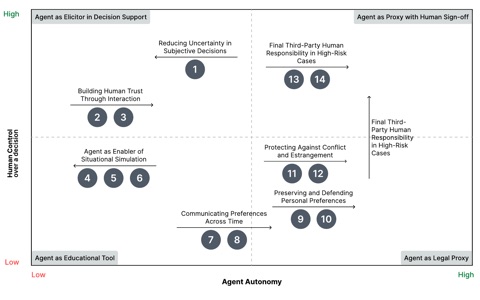 CHI'26 · Honourable Mention
Words to Describe What I’m Feeling: Exploring the Potential of AI Agents for High Subjectivity Decisions in Advance Care Planning
conferenceCare
-
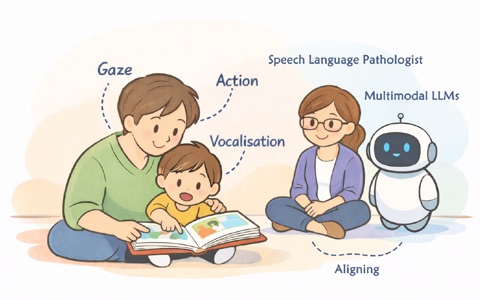 CHI'26 · Honourable Mention
Towards Aligning Multimodal LLMs with Human Experts: A Focus on Parent–Child Interaction
conferenceCareCollaboration
-
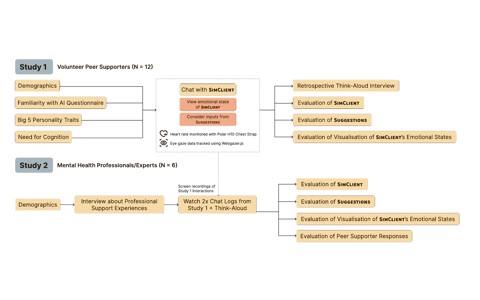 PACM HCI (CSCW'26)
"Is This Really a Human Peer Supporter?": Misalignments Between Peer Supporters and Experts in LLM-Supported Interactions
journalCare
More in this area
- DIS'26 PWiPActs of Configuration: Rethinking Provenance, Temporality and Legitimacy in Post-Mortem Agents
- DIS'26 PWiP"I'm Not Able to Be There for You": Emotional Labour, Responsibility, and AI in Peer Support
- CHI'26 LBWForeign Domestic Workers' Perspectives on an LLM-Based Emotional Support Tool for Caregiving Burden
- CHI'26 WorkshopRedistributing Voice and Responsibility: AI in Relationship-Centred Care
- CHI'26 WorkshopMore Than 1v1: Human-AI Alignment in Early Developmental Communities with Multimodal LLMs
- arXiv"I Said Things I Needed to Hear Myself": Peer Support as an Emotional, Organisational, and Sociotechnical Practice in Singapore
- CHI'25 LBWTowards Multimodal Large-Language Models for Parent-Child Interaction: A Focus on Joint Attention
- CHI'25 Workshop: Envisioning the Future of Interactive HealthEnvisioning an AI-Enhanced Mental Health Ecosystem
- arXivExploring Gaze Pattern Differences Between Autistic and Neurotypical Children: Clustering, Visualisation, and Prediction
- DIS'24 PWiPTowards Understanding Emotions for Engaged Mental Health Conversations
- CSCW'21 Conversational User Interfaces WorkshopDesigning a Disembodied Conversational Agent as a Digital Companion for Older Adults
Human–AI Collaboration
People increasingly think and make together with AI, and with each other through AI. We study what that collaboration looks like and build tools for it: AI that mediates how qualitative analysts work together, generative tools that let designers sketch and talk at the same time, and AI-assisted debugging for novice programmers. The aim is systems that follow what people mean and give feedback they can act on.
-
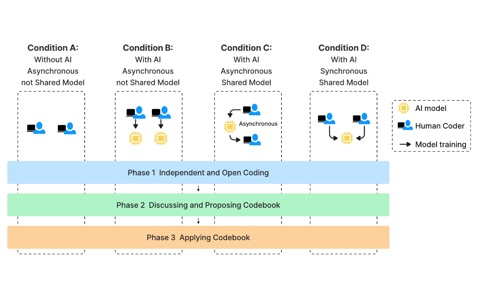 TOCHI'23
CoAIcoder: Examining the Effectiveness of AI-assisted Human-to-Human Collaboration in Qualitative Analysis
journalCollaboration
-
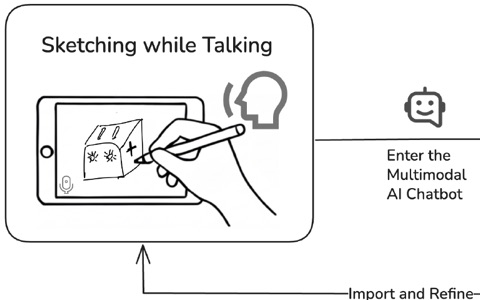 Creative AI for Live Interactive Performances (Springer)
TalkSketch: Multimodal Generative AI for Real-Time Sketch Ideation with Speech
abstract/workshopCollaboration
-
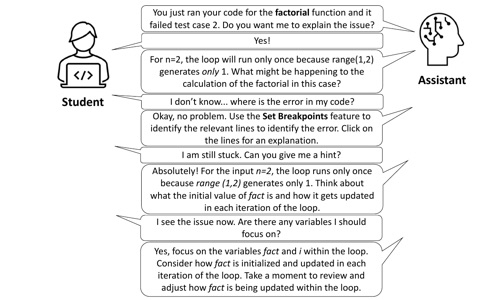 ASE'25
Simulated Interactive Debugging
conferenceCollaboration
More in this area
- arXivDuoSketch: How Pairs Navigate Challenges in AI-Supported Collaborative Design Ideation
- arXiv"I'm Very Happy for It to Start Hallucinating a Little Bit": Using ClayFlect to Negotiate Multimodal AI Representations in Material Meaning-Making
- arXivCommSketch: How Speaking while Sketching Steers Human–AI Design Ideation
- DIS'26 PWiPWhen Drawing Is Not Enough: Exploring Spontaneous Speech with Sketch for Intent Alignment in Multimodal LLMs
- CHI'26 · Honourable Mention Towards Aligning Multimodal LLMs with Human Experts: A Focus on Parent–Child Interaction
- CHI'26 LBWA Taxonomy of Human–MLLM Interaction in Early-Stage Sketch-Based Design Ideation
- CHI'26 WorkshopMore Than 1v1: Human-AI Alignment in Early Developmental Communities with Multimodal LLMs
- Koli Calling'25Designing for Novice Debuggers: A Pilot Study on an AI-Assisted Debugging Tool
- CHI'25 LBWTowards Multimodal Large-Language Models for Parent-Child Interaction: A Focus on Joint Attention
- CHI'24 LBWA Taxonomy for Human-LLM Interaction Modes: An Initial Exploration
- arXivImpact of Human-AI Interaction on User Trust and Reliance in AI-Assisted Qualitative Coding
Responsible AI: Risks and Robustness of Language Models
Language models are already used to spread and to counter disinformation, and to moderate what people see online. We study where these models fail and whom those failures harm: how people use LLMs as both sword and shield in disinformation, how offensive-language detectors break under the cloaking and code-mixing of online speech, and how well models understand cultures beyond the English-speaking world.
-
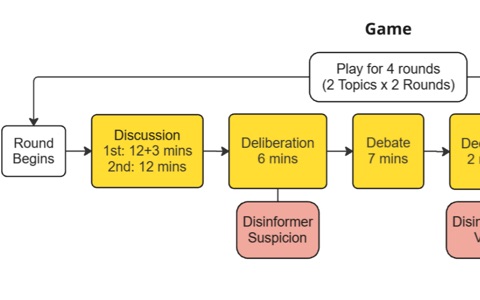 PACM HCI (CSCW'26)
Sword and Shield: Uses and Strategies of LLMs in Navigating Disinformation
journalResponsible AI
-
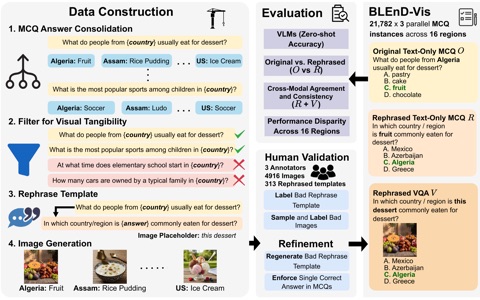 EACL'26
BLEnD-Vis: Benchmarking Multimodal Cultural Understanding in Vision Language Models
conferenceResponsible AI
More in this area
- arXivVEILED-SH: Vulnerability Expression through Indirect Language Evaluation Dataset (Self-Harm)
- EMNLP'25 FindingsHumor in Pixels: Benchmarking Large Multimodal Models Understanding of Online Comics
- EMNLP'24ToxiCloakCN: Evaluating Robustness of Offensive Language Detection in Chinese with Cloaking Perturbations
- CSCW'25 CompanionCommunication Games to Study Emerging Disinformation Scenarios With LLMs
- WOAH'24SGHateCheck: Functional Tests for Detecting Hate Speech in Low-Resource Languages of Singapore
- IJCAI'23Evaluating GPT-3 Generated Explanations for Hateful Content Moderation
- JCDL'24InfoTrace: A System for Information Campaign Source Tracing and Analysis on Social Media
- WWW'24 DemoBrinjal: A Web-Plugin for Collaborative Hate Speech Detection
- IEEE BigData'22MUSCAT: Multilingual Rumor Detection in Social Media Conversations